
Bench Warrants in Lexington County
South Carolina’s SCCA523 is titled “Bench Warrant After Failure to Appear.” It gives the court’s reason for the order and directs an officer to bring the person before the court. A missed appearance or failure to comply can lead to this process, but the judge and issuing court control what happens next.
Family Court uses a separate form and rule. Failure to appear, failure to comply, and failure to pay may be listed as reasons. A Family Court or child-support matter should go to its own clerk, not be treated as a General Sessions warrant.
Family Court Bench Warrants Follow Rule 13
South Carolina Family Court Rule 13 requires the prescribed bench-warrant form and a judge’s signature, or a clerk’s signature at the judge’s direction. The rule also directs the Sheriff or other local law enforcement to serve the order and report unserved warrants on a regular schedule. Family Court uses its own file path for Rules to Show Cause and support orders.
Contact the Family Court clerk or portal if the notice concerns a family order. The County Clerk’s page links the Family Court portal, but protected information may not display in a public case search.
Read South Carolina Family Court Rule 13 for the prescribed form and service procedure.
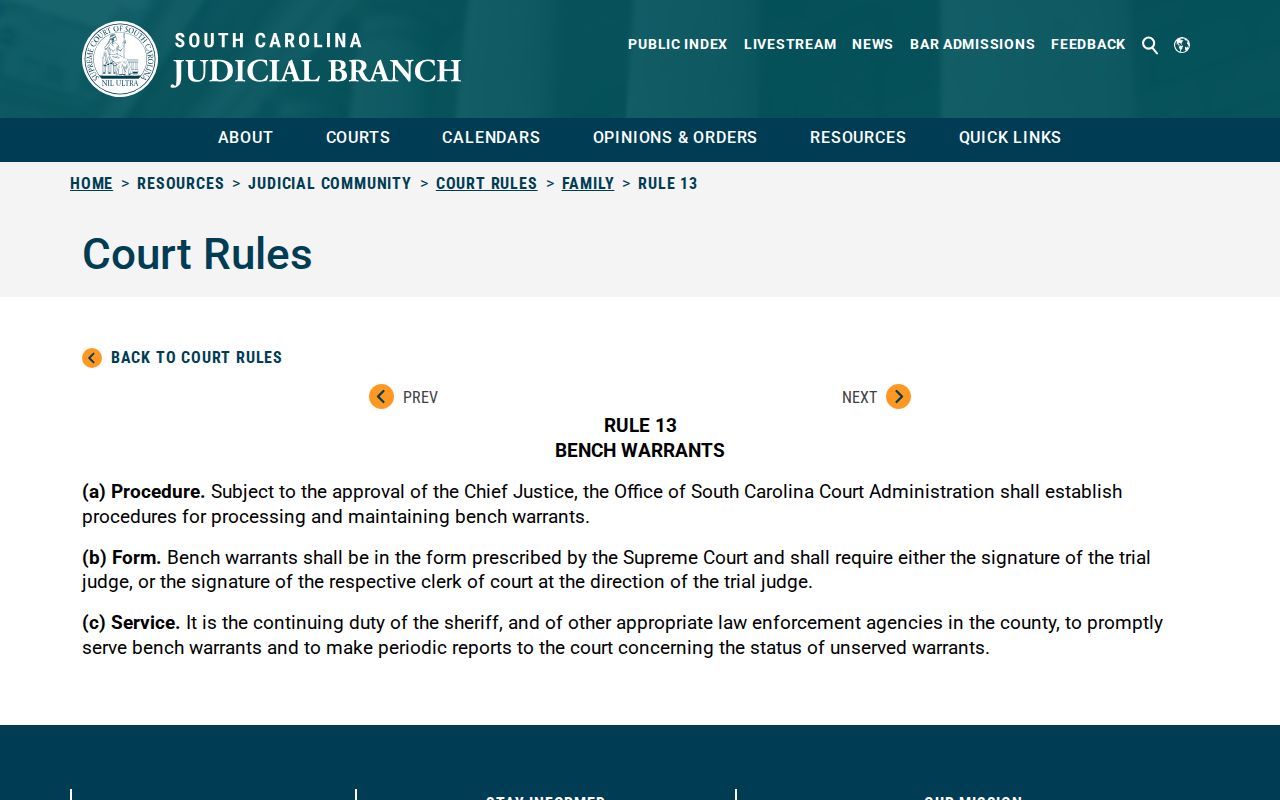
The South Carolina Judicial Branch Rule 13 page explains the separate Family Court warrant procedure.
How a Lexington County Bench Warrant Is Issued
After a missed appearance or other court obligation, the judge can issue a bench warrant under the procedure that applies to that case. SCCA523 identifies the county, court, case number, defendant, reason, bond reference, signature, and officer return. Its command is to arrest and hold the person and bring them before the court within 24 hours.
The Summary Court Bench Book says the person should go before the trial judge if court is in session, or a bond judge within 24 hours otherwise. The order does not create one online county roster. The issuing court remains responsible for the case and any recall.
Lexington County Bench Warrants Are Not Arrest Warrants
A bench warrant begins with an existing court obligation, such as a required appearance or compliance with an order. An arrest warrant follows a law-enforcement request and probable-cause process. Both can result in custody, but their trigger and case path differ.
South Carolina law addresses when an officer may request an arrest warrant and when a courtesy summons may be used. A missed court date does not by itself tell a reader which kind of order exists. Check the case paper and ask the issuing clerk.
Bench Warrant vs Arrest Warrant
A bench warrant is a court order in an existing case, usually after a missed appearance or failure to comply. An arrest warrant begins with a sworn law-enforcement application asking a magistrate or other authorized judge to find probable cause. The case paper, issuing official, and legal reason differ. Both orders may authorize custody, but each returns to its issuing court for status and any recall; a case search or booking entry does not substitute for that confirmation. For the separate issuance process, see Lexington County arrest warrants.
| Feature | Bench Warrant | Arrest Warrant |
|---|---|---|
| Trigger | Missed appearance or court order | Law-enforcement request supported through court process |
| Issuer | Judge or court under the applicable rule | Magistrate or authorized judge |
| Case path | Existing matter and court obligation | Criminal process tied to an alleged offense |
| Next step | Ask the issuing court about appearance or recall | Confirm service, counsel, and bond with the court |
Cayce and Irmo Use Different Bench Rules
Cayce Municipal Court describes bond estreatment when a person fails to appear or violates release. A surety may obtain a bench-warrant copy at the Clerk’s Office in Lexington within seven days, and the court describes a 90-day surrender or hold period for the bondsman before forfeiture. This is a Cayce rule, not a countywide deadline.
Irmo publishes a different payment instruction for a case tried in absence: 15 days from the court date before DMV noncompliance notification. Online payments post the next business day. Payment does not itself prove a warrant was recalled. Ask the city clerk what the judge requires.
Consult the County magistrate locations directory to match a summary-court matter to its district office.
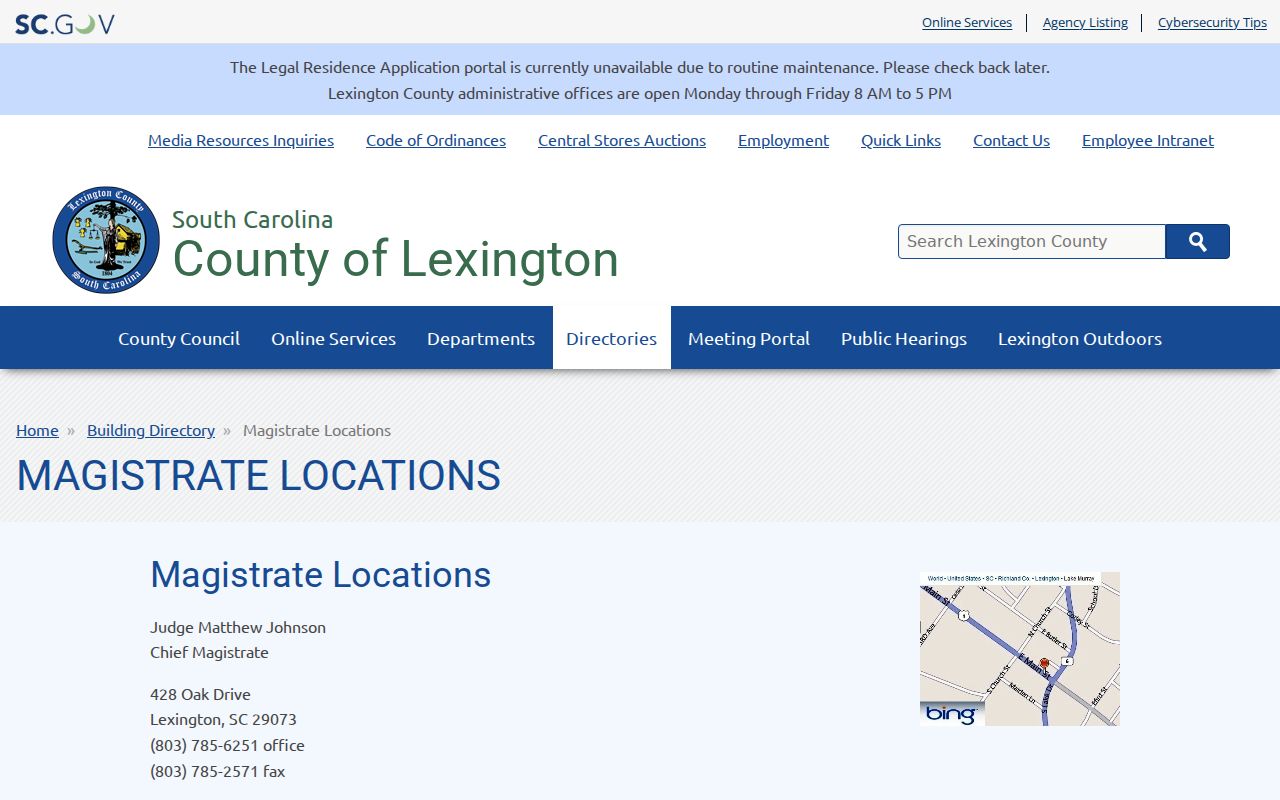
The county magistrate directory lists the districts that hear summary matters. It is separate from a city municipal court desk.
How to Resolve a Lexington County Bench Warrant
Start with the court named on the notice. The Sheriff serves process but does not recall the judge’s order. Ask the clerk what the judge requires, whether a lawyer may appear, and how the court will document a recall or new date.
- Use the citation or case paper to identify the court and case number.
- Call the clerk and ask whether the matter is a bench warrant, another notice, or a new date.
- Speak with a South Carolina attorney about a motion, appearance, payment, bond, or planned surrender.
- Keep a receipt or signed court order and ask when the status will be updated.
Caution: Lexington County publishes no universal walk-in recall docket. Call the issuing court or counsel before appearing.
Lexington County Has No Single Recall Desk
General Sessions, Family Court, six magistrate districts, Central Traffic Court, and municipal courts handle different records. The County Clerk is not the clerk for every city court. The county sources do not publish one recall form, universal fee, or walk-in surrender procedure.
Use the case agency and venue to find the right clerk. For county summary matters, the county lists Central Traffic at 139 East Main Street, Suite A, and magistrate offices by district. A contact list is a routing aid, not a promise that every warrant can be resolved at that counter.
Which Lexington County Court Issued It
A General Sessions notice goes to the Clerk of Court; a family order goes through Family Court; a traffic matter may be with Central Traffic Court or a city court; a summary criminal matter may be with one of the magistrate districts. The issuing judge controls the warrant and any recall. The Sheriff can answer service questions but cannot decide the case.
Use the Lexington County warrant overview for the local office map, then call the clerk shown on your paper. If the case number is unknown, the County Clerk’s General Sessions and Criminal Court Matters desks are separate contacts.
Family and Summary Files Stay Separate
Family Court uses SCCA413 and Rule 13, while a summary-court failure to appear uses the SCCA523 bench-warrant form. A General Sessions case follows the Circuit Court clerk and Solicitor path. Public Index can help locate some case context, but sealed or confidential records may not show.
Do not assume that one search, one clerk, or the Sheriff’s inmate list covers every bench warrant. Confirm the court’s identity and current order before treating a case status as final.