
Arrest Warrants in Lexington County
An arrest warrant is a court order. It authorizes law enforcement to take a person into custody, and a Lexington County magistrate or judge decides whether to issue it. The Sheriff does not issue the order. South Carolina law spells out when an officer may officially request a warrant and when a courtesy summons may be used instead. The case paper points the way. A warrant tied to a municipal police matter usually runs through that city's municipal court, while Sheriff and state-agency cases can take the county Preliminary Hearing Court route. Read the agency named on the case paper.
Lexington County Arrest Warrant Requests
S.C. Code § 22-5-110 governs Lexington County warrant requests. It says when a law-enforcement officer acting officially may seek an arrest warrant, and when a courtesy summons may be used instead. The statute creates no online warrant-search form. The issuing decision remains part of the judicial process. Keep three things separate. The charge, the court order, and the later service record are different papers, not one file. A Lexington County clerk can tell you which documents are public and whether a warrant or affidavit copy can be obtained. The South Carolina magistrates chapter spells out the statutory rules for issuing and serving warrants across the state.
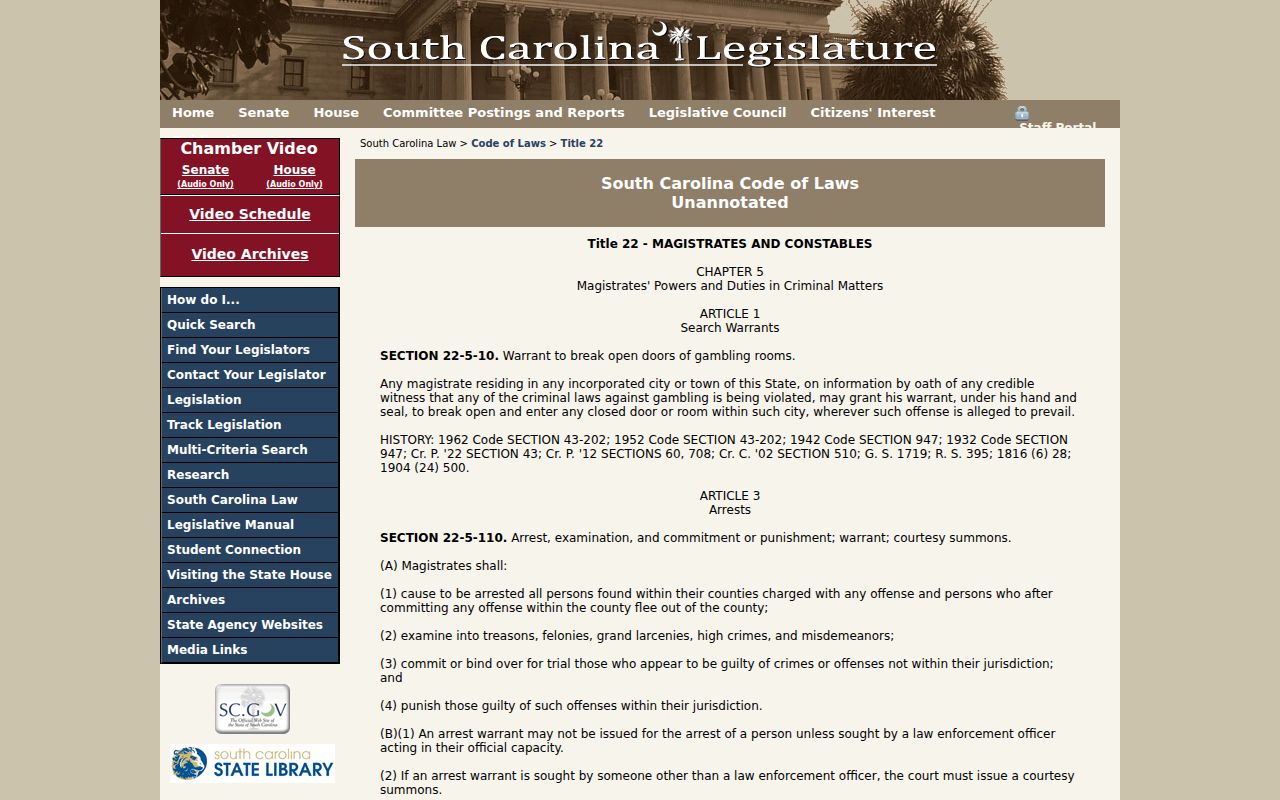
The South Carolina Code outlines the magistrate’s warrant authority and the law-enforcement request process.
What a Lexington County Arrest Warrant Contains
Blank state court forms show a warrant's structure. A real Lexington County warrant may carry sensitive identifying fields, such as an address or date of birth. Only the categories belong on a public page.
| Case number | Use the number printed on the court paper |
|---|---|
| Court and county | Names the issuing jurisdiction and venue. |
| Reason / charge | States the process reason or related criminal case. |
| Judge and issue date | Shows the signing authority and date. |
| Service return | Records a service attempt or officer return. |
| Bond reference | May refer to a bond set for the case. |
Lexington County Criminal Papers Move on a Timeline
Timing matters after a Lexington County arrest. South Carolina Criminal Rule 3 sets the clock. It gives handling periods for criminal warrant and charging papers, including a 15-day window to forward specified documents to the General Sessions Clerk. The Clerk then has two business days to send the warrant to the Solicitor, and the Solicitor gets 90 days to indict, dismiss, or make another written disposition. These are processing rules, though. No Public Index date is promised. Ask the Clerk which document has been filed. Read South Carolina Criminal Rule 3 for the filing and forwarding steps that follow an arrest in Lexington County.
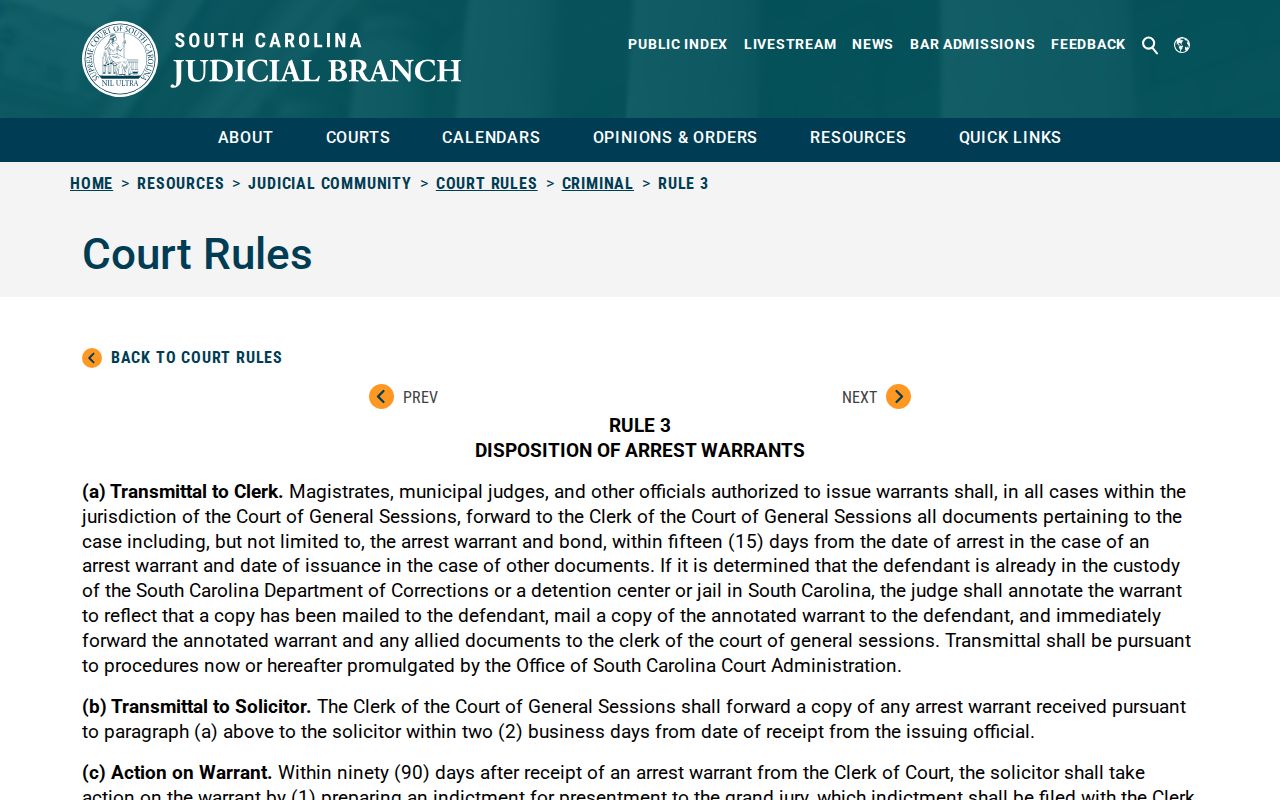
Criminal Rule 3 describes the court-to-clerk and Clerk-to-Solicitor steps for covered documents.
How Lexington County Arrest Warrants Are Served
Once a Lexington County judge or magistrate issues a warrant, it goes to the Sheriff's Warrant Division. That unit tracks and serves warrants across the county. It works with investigators and the Fugitive Unit. City police may serve their own municipal process instead. The issuing court, not the server, controls the case. Sheriff and state-agency cases use Preliminary Hearing Court at 139 East Main Street, Suite A. Municipal matters route back to the issuing municipal court. If arrested, ask for counsel and follow the court's bond process. The county's Preliminary Hearing Court page shows which agency route a Lexington County case takes.
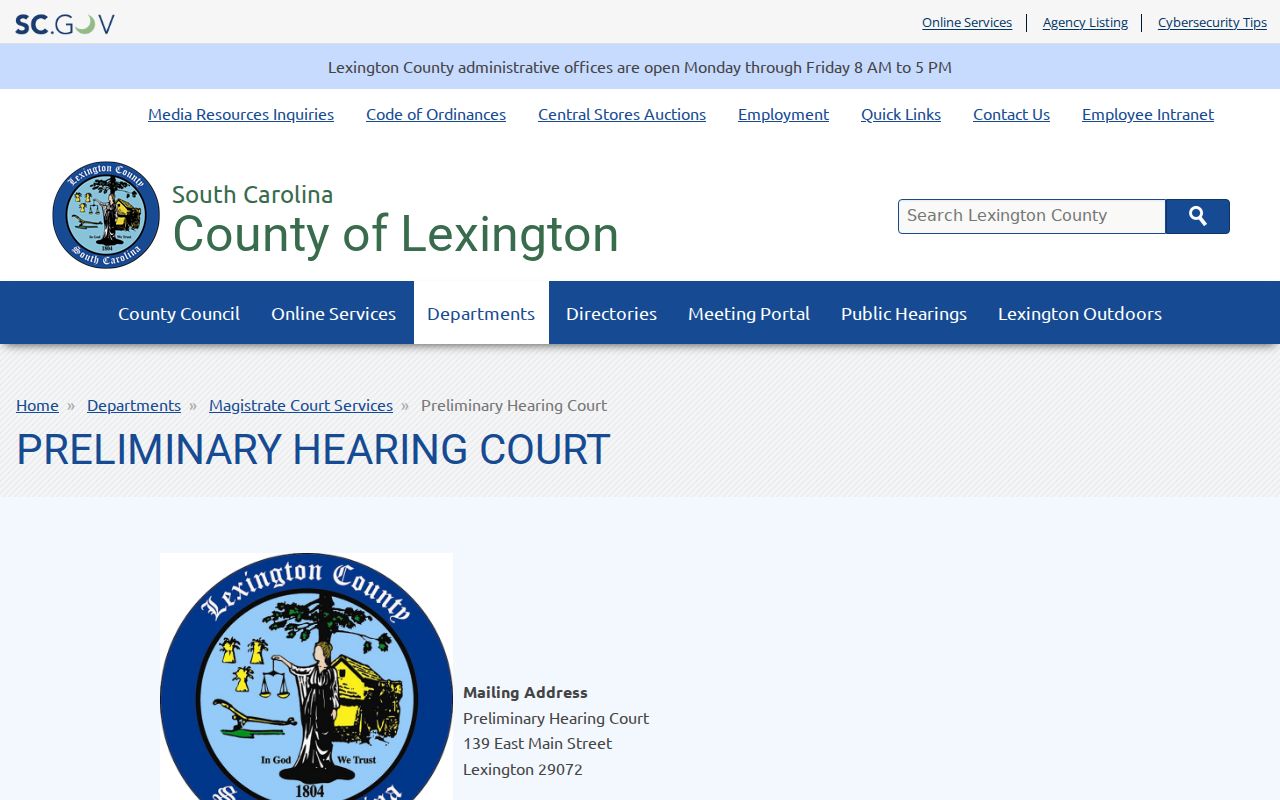
Lexington County's Preliminary Hearing Court page explains which agency cases belong at the Summary Court Center and which stay with a municipal court.
Lexington County Service Has Several Routes
The Warrant Division serves warrants, subpoenas, and civil papers. The Lexington County Sheriff also transports people to and from detention and court. Court security handles service and arrests at the judicial center. Municipal matters may run differently. So identify the issuing agency first, whether the Sheriff, a state agency, or a town department. The courthouse directory lists magistrate locations. Those lists show no active warrant roster, though. Call the named court or Warrant Division and ask what it needs before you travel.
Arrest Warrant vs Summons vs Bench Warrant
These papers appear at different points in a case. South Carolina law says when an officer-requested arrest warrant may issue and when a courtesy summons fits instead. A bench warrant usually follows a missed appearance or ignored order in an existing Lexington County case. Match your response to the paper.
| Feature | Arrest Warrant | Summons | Bench Warrant |
|---|---|---|---|
| What it orders | Authorizes arrest under judicial process | Directs a person to appear | Brings a person before the court |
| Basis | Law-enforcement request and court review | Summons-eligible process | Missed appearance or court order |
| Who issues it | Magistrate or judge | Court or authorized process | Judge under the applicable rule |
| How to respond | Confirm with court and counsel | Meet the stated appearance date | Contact issuing court and counsel |
General Sessions and Municipal Cases Differ
The Lexington County Clerk keeps General Sessions, Common Pleas, and Family Court records. Magistrate and municipal clerks keep their own files. Those cover summary, traffic, ordinance, and local court matters. The Sheriff is not the clerk for city warrants. For a municipal police matter, the county Preliminary Hearing Court page sends the issue back to that municipal court. Sheriff and state-agency cases may use the Summary Court Center for the preliminary hearing. Read the agency on the case paper before calling.
What to Do If You Have a Lexington County Arrest Warrant
Call the Warrant Division or the issuing court to learn which case is involved. Ask if an attorney can appear for you. Ask what identification is needed, and whether the judge wants a planned surrender, bond, or a motion. No one procedure covers every Lexington County warrant.
Important: Speak with a licensed South Carolina defense lawyer before appearing. The issuing judge controls bond, recall, and any new court date.
Lexington County Arrest Status Needs Confirmation
Need to know where an arrest stands? Lexington County has no official public active-warrant search, so no single screen answers that. The Public Index can turn up a covered case, though entries may lag and sealed or confidential files stay off it. Even a pending or disposed case entry will not tell you whether a warrant was served or recalled. For service questions, go through the Sheriff Warrant Division, and bring the case to the named clerk. A federal matter belongs to the District of South Carolina and its federal clerk instead of the county Sheriff's public channels.